In The Beginning
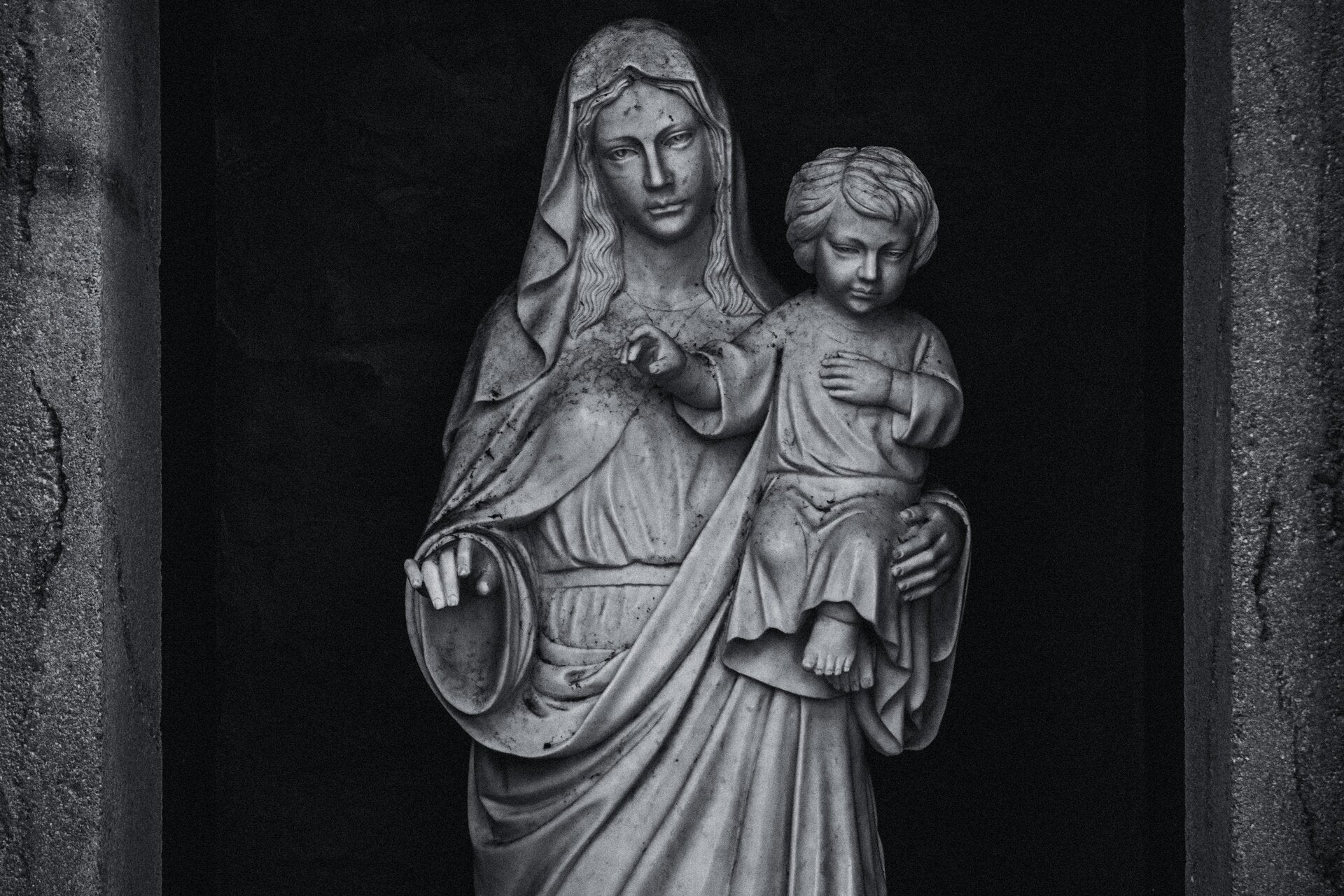
1In the beginning was the Word, and the Word was with God, and the Word was God. 2The same was in the beginning with God. 3All things were made by him; and without him was not any thing made that was made. 4In him was life; and the life was the light of men.
John 1:1-4
So begins the Book of John in the New Testament. But who, or what, was this “Word” that was so essential to life and all Creation?
Modern Christians would have you believe that this Word is Jesus, but it is not so.
Solomon tells us, in Proverbs 8:1-31 (NIV)
1 Does not wisdom call out? Does not understanding raise her voice?
2 At the highest point along the way, where the paths meet, she takes her stand;
3 beside the gate leading into the city, at the entrance, she cries aloud:
4 “To you, O people, I call out; I raise my voice to all mankind.
5 You who are simple, gain prudence; you who are foolish, set your hearts on it.
6 Listen, for I have trustworthy things to say; I open my lips to speak what is right.
7 My mouth speaks what is true, for my lips detest wickedness.
8 All the words of my mouth are just; none of them is crooked or perverse.
9 To the discerning all of them are right; they are upright to those who have found knowledge.
10 Choose my instruction instead of silver, knowledge rather than choice gold,
11 for wisdom is more precious than rubies, and nothing you desire can compare with her.
12 I, wisdom, dwell together with prudence; I possess knowledge and discretion.
13 To fear the Lord is to hate evil; I hate pride and arrogance, evil behavior and perverse speech.
14 Counsel and sound judgment are mine; I have insight, I have power.
15 By me kings reign and rulers issue decrees that are just;
16 by me princes govern, and nobles—all who rule on earth.
17 I love those who love me, and those who seek me find me.
18 With me are riches and honor, enduring wealth and prosperity.
19 My fruit is better than fine gold; what I yield surpasses choice silver.
20 I walk in the way of righteousness, along the paths of justice,
21 bestowing a rich inheritance on those who love me and making their treasuries full.
22 The Lord brought me forth as the first of his works, before his deeds of old;
23 I was formed long ages ago, at the very beginning, when the world came to be.
24 When there were no watery depths, I was given birth, when there were no springs overflowing with water;
25 before the mountains were settled in place, before the hills, I was given birth,
26 before he made the world or its fields or any of the dust of the earth.
27 I was there when he set the heavens in place, when he marked out the horizon on the face of the deep,
28 when he established the clouds above and fixed securely the fountains of the deep,
29 when he gave the sea its boundary so the waters would not overstep his command, and when he marked out the foundations of the earth.
30 Then I was constantly at his side. I was filled with delight day after day, rejoicing always in his presence,
31 rejoicing in his whole world and delighting in mankind.
Sophia is, literally, the Word that was with God in the Beginning and is the Power by which All Things were and are Created.
But if that is so, who is She? Where has She been? And how can we develop a relationship with Her?
It is through our own Mothers that we can come to know the Goddess Sophia, that Infinite Divine Feminine that was at God’s side when all things came into being. We come into this world through a woman and our first understanding of the world is from our Mothers. It is from her that we learn about love and tenderness. We are protected, cared for, and nurtured by her, and we are guided and directed by her in our younger years. If, sadly, this aspect of “Mother” has been lacking in your life, you definitely know it is missing. Mother is so primal that it is an archetype that is encoded within us. We never outgrow the need for our Mother.
Just so, Sophia is the Mother Goddess, She Who Creates, from whom we all come. She is known as She of Ten Thousand Names. She has been known in every civilization throughout time. She gave Man his first understanding of all things feminine. We are protected, cared for, and nurtured by Her, and we are guided and directed by Her throughout our lives, whether we know it or not. We can never outgrow our need of Her.
When the Goddess was eliminated, much was taken from humanity. Men no longer knew how to love. They were cut off from their emotions and were taught that expressing emotion somehow made them weak and not manly. They became domineering and angry, thirsting for the blood of their enemies and abusing the women in their lives. They knew no tenderness, compassion, caring, nurturing, or understanding. All of these things are attributes that come from the Goddess through women. Women no longer had any guidance on how to give these things to men. There was no one to turn to for aid in childbearing, women’s issues, or healing. Both men and women were robbed of the joy of true union between them. Sex became dirty and degrading, and women became subjugated and degraded – chattel to be bought and sold and used and abused, second class citizens at best, robbed of the opportunity to be educated and to speak their mind or participate in civil or religious activities. Women no longer had any self esteem. The Goddess Sophia had fallen to the status of prostitute, the sacred became profane. Without the Goddess, God became an angry and vengeful eunuch who sent his followers out to kill in His name. His leaders became greedy mysogenistic warmongers who hated women and the life they carried in their bodies. Millions were murdered in the name of this God - the early gnostics, Cathars, Templars, Jews, women, and Native Americans just to name a few.
Who is She?
The Goddess has been with us since the Creation of all that is, and is, in fact, the active principle of Creation. She is the Great Mother, She Who Creates, She of 10,000 Names. When the Great Mystery became conscious, it sought to understand itself and so Great Mystery created an Image, which divided into male and female – the Infinite Divine Masculine and Infinite Divine Feminine. The Observer and the Observed. Great Mystery cannot be known by us, but the feminine and masculine aspects of the Great Mystery can. It is by coming to know the Infinite Divine Feminine, or the Goddess, Sophia, God's Wisdom, that we can know Great Mystery, for She leads us back to the Source of Creation. She, Sophia, the Divine Feminine, and He, Logos, the Divine Masculine, are One with each other and with Great Mystery. Sophia calls to Her daughters as Logos calls to his sons.
The Goddess in Ancient Times
Throughout history, there has always been a Goddess. In most cultures, there was more than one Goddess, each representing different aspects of the Divine Feminine, such as spinning, weaving, domesticity, creativity, beauty, love, sexuality, fertility, and Motherhood, to name a few. Some of the more dominant Goddesses were associated with attributes such as magic, war, strategy, hunting, farming, wisdom, fate, justice, etc.
In Mesopotamia, there were Inanna, Ishtar, Ninlil, Ninhursag, Gaga, and others.
In Africa, Isis was the major Goddess, but there were also Nut, Tefnut, Nephthys, Hathor, and others, such as Bulk and Atete.
In Canaan there were Ashteroth, Astarte, and Anat.
In Pre-Islamic Arabia there were Uzza, Manat, and al-Lat.
In Iran there were Anahita, Daena, Spenta Armaiti, Ashi, and others.
Greco-Roman Goddesses were Persephone, Demeter, Artemis, Aphrodite, Athena, Hecate, Hera, and others.
Celtic Goddesses were Brigantia, Epona, Aine, Brigid, Danu, Fand, the Morrigan, and others.
Germanic Goddesses were Eostre, Sinthgunt, Frigg, Freyja, Sif, the Valkyries and others.
Hinduism has Sarasvati, Parvati, Durga, Kali, and others.
Chinese have Mazu, Zhinu, Amaterasu, Inari, Kwan Yin, and others.
These are just a few examples.
Where Has She Been?
The Goddess has always been with mankind, guiding and directing us. But over time, certain civilizations and cultures that we, the Western World, are most familiar with became more and more patriarchal, wresting all power from the Goddess and eliminating Her, usually by force, as Her people did not give her up willingly or easily.
The Goddess of the Jews
Most people think that today’s Judaism is basically the same as the religion that is described in the Hebrew Bible. But that isn’t true. Judaism was the religion of just one of the twelve tribes of Israel and actually differs dramatically from the religious beliefs of Moses’ day. The Hebrew Bible actually tells of the emergence of Judaism from the earlier Israelite beliefs and practices.
The events that eventually led to monotheism and the suppression of Asherah, Yahweh’s consort, along with all other gods that were worshipped in the area, appears to have started in the eighth century BCE, when both Israel and Judah suffered from the rise of the mighty Assyrian Empire. At this time, the worship of Asherah, Queen of Heaven, was widespread throughout Judea and the Northern Kingdom of Israel. The prophets equated to the people the connection between prosperity and faithfulness to Yahweh. When bad fortune fell on the kingdom the prophets told them it was because they were backsliding and worshipping other gods besides Yahweh. This kind of preaching continued century after century. At first, Asherah was considered a part of the Yahweh religion, as she was his consort. Her statue stood in the Temple of Solomon. Asherah was worshipped in her sacred groves, called “asherim,” all across Judea and the Northern Kingdom of Israel. The first of the Yahweh Alone prophets seem to be Hosea and Amos in the mid-seventh century BCE, but prophets such as Elijah and Elisha, his successor, became increasingly “Yahweh Only,” allegedly chosen by Yahweh to harass and browbeat the nation of Judah back to the proper worship of God. They considered themselves to be the keepers of the covenant, and their job to be ensuring that the Israelites kept their side of the bargain with Yahweh to gain and keep his favor. This became a vicious cycle that pushed them ever closer to monotheism – the worse things became, the more they had to re-devote themselves to the worship of Yahweh only to re-gain his favor. However, no matter how hard the prophets preached, and despite several kings, including Hezekiah and Josiah, destroying all of Asherah’s places of worship, she continued to be honored in the countryside. She was the people’s goddess, and they refused to give her up. Every time the priests and kings thought they had stamped her out, her worship broke out once again among the people.
During Josiah’s time, a “Book of the Law,” supposedly written by Moses, was “discovered” by the Temple Priests, and it seems that it is at this time that the priests joined the prophets in their Yahweh Only campaign. This led to “Deuteronomism” – adherents of this new “Second Law” and the creation of the Deuteronomistic history, referring to the re-writing and editing of the past in the books of the Hebrew Bible, according to how the editors thought things should have been. But even then, although the significance of the Asherah cult was downplayed, it was not explicitly condemned.
The pivotal moment and true beginning of modern Judaism took place roughly 80 years after the return from exile in Babylon, in the mid-fifth century BCE. When the Jews fell to the Babylonians in the late fifth century BCE, Nebuchadnezzar deported the royal, aristrocratic, and priestly elite and craftsmen to Babylon, along with the treasures sacked from the Temple at Jerusalem, starting what is known as the Jewish Diaspora. During their miserable exile, the prophetic view became even more entrenched in their minds. They became fanatical in their worship of Yahweh. Did not their situation vindicate the words of Jeremiah and Isaiah? Meanwhile, at home in Judea, the common folk who had been left behind continued their lives pretty much as normal, including the worship and veneration of Asherah.
At this time, Samaria was the capital of the former Kingdom of Israel, a very strong power in the area. Although Yahweh worshippers, they did not bear the bitterness that had effectively hardened Yahweh worship into monotheism in Judea. Although the Book of Kings would have us believe that when Samaria was conquered by the Assyrians, the entire population was carried off and foreigners brought in to replace them, further scriptures never mention this again.
When the captives of Babylon were finally allowed to come home in the mid-fifth century, they found a place they hardly recognized. All of their lands had been confiscated by those living there, and Asherah worship was widespread and thriving. The people living there did not miss them while they were gone. Remember, these were the royalty, the aristocrats, and the priestly elite returning. They began demanding their property and status be granted back to them, and the priests immediately began preaching the “Yahweh Only” beliefs that were now so firmly entrenched in their minds. The returning patriarchy went to war with the goddess. The returning captives regarded themselves as the true upholders of the religion, though they were definitely in the minority at home.
The Second Temple was consecrated in 516 BCE. The Yahweh Only priests became known as the Temple Priests and were symbolic of their fanatic Yahweh worship. But it was not until half a century later, with the appearance of Nehemiah and Ezra, that the Yahweh Only reforms truly took root. These two prophets were instrumental in re-establishing the position and prominence of the families that believed they had the best claim on the land. The elite were once again established in Judea, and with them came the prominence of the Yahweh Only patriarchy.
After completing the rebuilding of the city wall, Nehemiah organized an assembly of the families and Ezra read to them the Book of the Law of Moses (Deuteronomy), thereby fixing the history of Israel as recorded in Deuteronomy. Everyone entered into a new covenant with Yahweh. The officials of Jerusalem standardized the religion by agreeing on an officially sanctioned cannon of sacred texts. Until that time, there was no written account of Hebrew history. The Hebrew Bible was written after the reforms of the religion that culminated in the 450’s BCE. With that reform, the goddess was banished from Jewish religion and traditions and from all of Judea.
It was not until John the Baptist began preaching in the wilderness and baptizing that the Goddess was made known to the Jews. John baptized Jesus and Jesus went forth to start his own mission. But what was John baptizing people into? And what did Jesus actually preach?
Modern Christianity and Gnosticism
The answer to these two questions is a different subject and too extensive to cover here. The short answer that can be given is that they were gnostics. They were preaching about having a personal relationship with God, and imparting knowledge of the Goddess who stands by His side. Gnostics treated women as equal with men, and women held positions of power and leadership within their communities. From their teachings, many gnostic sects came into being, all preaching similar teachings – all but one, who took the mythos of Jesus as a dying and resurrecting God/Man literally and preached that his resurrection was literal. They were a small sect at first but very adamant about their position. The other gnostic sects pretty much ignored them, as they allowed space for everyone’s beliefs. By the time this sect came into power, Gnostic Christianity had spread through most of the Mediterranean, flourishing in places such as Alexandria, Antioch, Ephesus, and Rome. However, sometime around the end of the second century in Rome, these “Literalists” began to grow in power and numbers. At that time, there were at least 15 mythos of dying and resurrected God/Men, but the literalists claimed that their God/Man actually lived and died on the cross and was literally, physically resurrected from the dead. This set them apart from all other religious sects and appealed to many. The other gnostic Christian sects looked upon the story of Jesus as an allegory, not to be taken literally. As the literalists grew in power, they began to actively and viciously attack all other gnostic sects, burning books and murdering gnostic leaders. By the fourth century the Roman Church had condemned anything gnostic as heresy.
Despite the literalist Church’s unrelenting drive against Gnosticism, schools of Gnosticism continued to survive - Manicheans into the 13th century, and Simonians into the 14th century. Paulicians survived until the 10th century, and in the Balkans the Paulicians became Bogomils. In the 12th century, the Bogomils developed into the Cathars of Southern France.
Having gained the upper hand and coming into power, the literalist Roman Church waged open warfare against all who did not believe as they did. They literally created a bloodbath across Europe and the Mediterranean, murdering all who opposed them, burning books, destroying sacred sites, and plunging Europe into the Dark Ages. The literalists denied the existence of the Goddess until forced to acknowledge a feminine presence and, when they did, they venerated Mary (Jesus’ Mother) as the Mother of God and a perpetual Virgin. Mary Magdalene, the Apostle to the Apostles and the First Witness of the Resurrection, was made into a prostitute by papal decree. Women were no longer allowed to hold office or even speak in meetings. Women were considered sinful, the cause of Man’s downfall, leading men astray and tempting them. As they had adopted the Hebrew Bible as part of their canon of sacred scripture, it is no surprise that they considered women in the same light as had the Deuteronomists of the Old Testament. All religions that venerated the Goddess were targeted and destroyed. The last bastion of Goddess worship was the cult of Isis, which came into being sometime between the third and second century BCE. She was worshipped throughout the Greco-Roman world as well as Egypt. The last temple to Isis fell around 550 A.D.
For centuries, the Goddess has been denied and banished. But evil men cannot keep her down forever. She is rising once again, to take Her rightful place beside God, her consort. Her rising energies bring balance back to human consciousness and herald the dawning of a New Age – the Age of Aquarius.
How Can We Develop a Relationship With Her?
The key to the other world, which is the imaginal realm, is reached with your imagination. Your imagination is what carries you into the other world. When your inner world becomes as real as your outer world, you transcend normal consciousness. The problem with most people is that they see their imagination as being unreal, as being fantasy or illusionary. Mystics understand that the only way to transcend the rational mind is to make the inner world more real than the outer world. The imaginal realm is not the same as the imaginary realm, though they have many similarities.
Most people are constantly inundated with self-talk. They don’t consider that self-talk to be imaginary. It is essentially them having an internal dialogue with themselves. So, if you have a dialogue in the imaginal realms with a disincarnate voice, how is that different from having an internal dialogue with yourself?
If you want to talk to the Goddess, you simply open a dialogue with her in the imaginal realm, just as you would call a friend on the cell phone. Is that dialogue real? The real question is, is that dialogue any less real than the conversation you have with yourself? And when you start having conversations and the other person in the conversation is saying things that you didn't imagine and could not possibly know, how can that be your imagination? Each being in the imaginal realm is actually a field of energy, but presents himself/herself as a persona in your imaginal realm, to make themselves real to you. They/you create an individual persona for each being you communicate with so that you can relate to him/her. When you create a person in the imaginal realm with a persona and you talk to them, that conversation is as real as any conversation you would have with another person, just like talking on the cell phone with a friend. The conscious mind perceives that the person you are talking to is a real person, not a field of energy. Hearing his/her conversation back to you with your imagination works the same way. The conscious mind cannot tell the difference. The power of the imagination to take that which is unreal and make it real does not mean that it is unreal.
How do you get past the conscious mind and its doubts? When you have a telepathic conversation in your mind, the conscious mind cannot tell the difference between your own inner chatter and a conversation with a disincarnate being. It is when you perceive the imagination to be unreal that the conscious mind blocks the conversation. When the outer world of conscious, mundane reality is more powerful than the inner world, the outer world controls your inner world and has the power to block any incoming message that it perceives to be coming from an unreal or outer source. The inner world must come to a place where it is as real as the outer world. The problem with most people is that their imaginal world is not real to them. Here is the difference: Imaginary is fantasy; Imaginal is the inner world of reality. The beings you talk to are disincarnate, not imaginary. They exist in the imaginal world, which is a construct, or space between the worlds. In that imaginal world there are no boundaries. The imaginal world lies in the Quantum field of energy, the same place you go when you meditate. In the imaginal world, the inner world, every companion, disincarnate being, or field of energy that you communicate with has a persona. When you want to talk to them, simply direct your focus on that persona. Every field of energy is a living, breathing persona in the imaginal realm.
It might help for you to create, in the imaginal realm, a place where you go to meet with the persona you want to communicate with. Perhaps a temple or a sacred grove or a quiet pond. Whatever you are drawn to. Fill in the details. Make it your sacred place. When you are there, and you have filled in the details and you are ready to communicate, call on the persona you wish to communicate with. This can as easily be your Guardian Angel as it can be the Goddess. Open your mind as you would call someone’s number on the cell phone and begin to speak to him/her. Listen for the answer. Believe that the voice you hear is real and is a being that is speaking to you (clairaudience). You may see pictures instead of hearing a voice (clairvoyance). Or you might just get an impression or a feeling (clairsentience). Whatever it is, accept it.
The more you do this, the better your contact will be and the clearer their answers will be to you. Eventually, you will not need your sacred space to communicate with him/her. This is how all of our disincarnate companions communicate with us. Some are with us for a lifetime, some come for a season, and some come to help us with a life lesson and then move on. The Goddess and your Guardian Angel/Companion are always with you, just a thought away.
November 12, 2025